A New Era in Cancer Treatment: Personalized Combinations Instead of a Single Smart Drug

1. Why Is the "One Gene, One Smart Drug" Approach No Longer Enough?
In cancer treatment, finding a single genetic mutation (error) in the patient's tumor and giving a single smart drug aimed only at that error was an important step in oncology. However, a recent article published in the journal Trends in Cancer emphasizes that this old approach no longer meets expectations.
Large clinical trials conducted in the past, covering thousands of patients (DRUP, NCI-MATCH, SHIVA), have shown that the success (response) rate of treatments focusing on only a single genetic target has remained stuck at around 15% to 18%. Cancer cells are usually fed not by a single genetic error but by multiple mutations. For this reason, targeting only one weak point to stop cancer is often an incomplete strategy.
2. Next-Generation Personalized Treatment: Hitting All of Cancer's Weak Points at Once
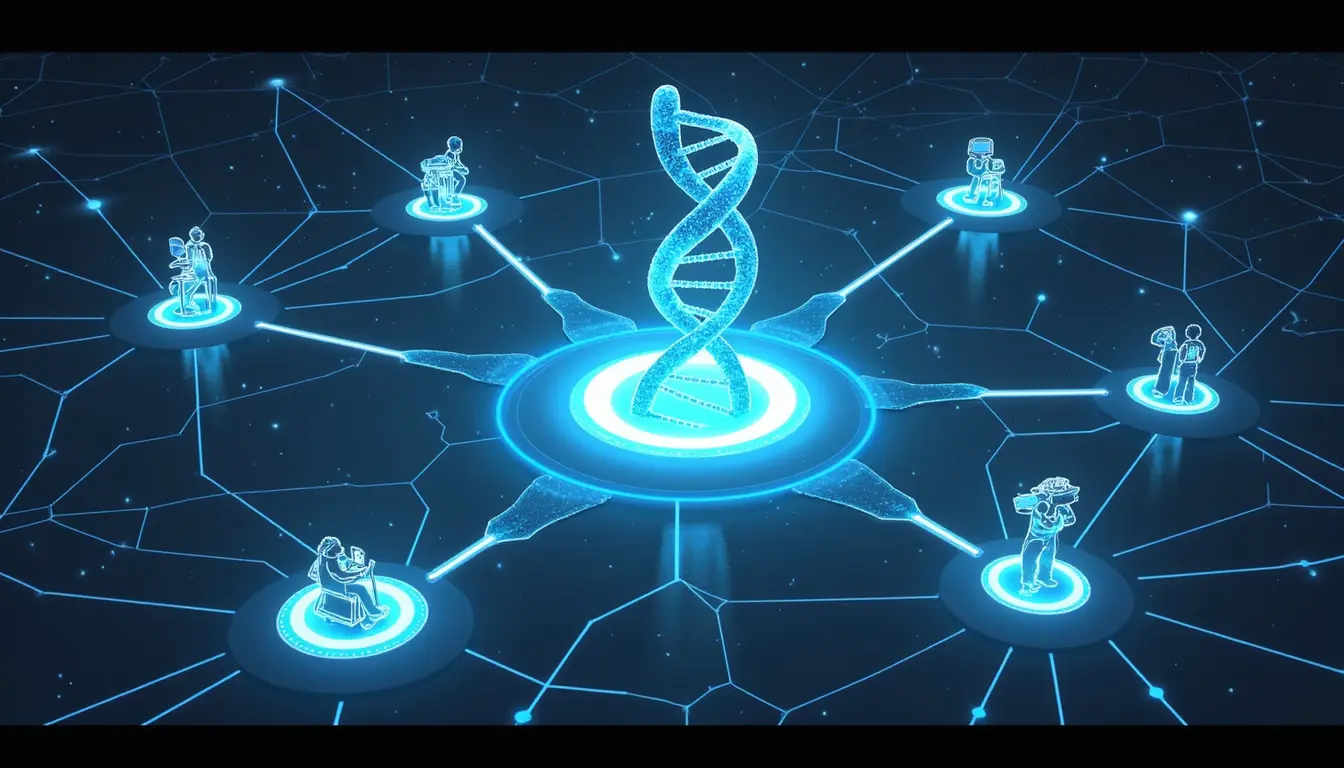
The cancer treatment of the future requires broader-scope strategies suited to the complex nature of the disease. Next-generation studies highlighted in the article — such as I-PREDICT, which fully aligns with our clinic's vision — design personalized combination treatments that target multiple mutations at once by analyzing patients' genetic profiles in a multidimensional way.
- In advanced-stage cancers (metastatic tumors), patients' cancer cells generally carry more than one genetic error (five on average).
- Controlling this complex structure of cancer by blocking just a single pathway (with a single drug) is biologically very difficult.
- Instead, when smart drug combinations addressing the patient's entire detailed gene map are used, patients' treatment outcomes and survival rates increase in a linear fashion.
3. What Does the Success of the I-PREDICT Study Tell Us?
Research clearly demonstrates the power of this personalized approach, which targets multiple weak points of cancer simultaneously. The I-PREDICT study showed that patients receiving combination treatments highly matched to their genetic profile (with a match score >50%) achieved clinical benefit at a rate of 60%. For those with a low degree of match (≤50%), this rate remained at only 29%. These findings prove that it is essential to treat every patient as a completely unique molecular case.

4. A Critical Point to Note: Validation of Genomic Tests and the Experience of the Team Making the Treatment Decision
At this point, a vital warning must be made to protect our patients: simply mixing different smart drugs together — building strategies based on molecular approaches that have no scientific grounding, have not been analyzed by an experienced team, or rely on unvalidated molecular tests — is absolutely not correct or safe.
The drug regimens used in combination must always be based on the results of Comprehensive Genomic Profiling (CGP) tests validated to international standards. However, the test result alone is not enough; when deciding on combination treatments, it is essential that experienced molecular and scientific teams who can interpret this data design the treatment strictly in line with current evidence in the international literature. Because if target mutations cannot be identified accurately and reliably, or if drugs not supported by scientific evidence in the literature are combined, the treatment may not only remain ineffective — unexpected, severe, life-threatening toxicities (side effects) resulting from drug interactions may also occur.
5. Our Clinic's Approach to Up-to-Date, Scientific, and Safe Treatment
As the article also states, the era of giving treatment based only on a single gene analysis in oncology has come to a close; a new era has begun in which comprehensive genetic testing is performed and modern smart drug combinations are put into action.
This scientific reality forms the foundation of the treatment approach we have applied at our clinic for years. Using Comprehensive Genomic Profiling (CGP) tests with proven validation (validity and reliability), we map out our patients' tumors in detail. We analyze the resulting complex genetic data in depth with our Molecular Tumor Board (MTB), which has oncological and genetic expertise. By carefully calculating possible drug interactions, mechanisms of action, and potential toxicity risks, we offer our patients the safest and most powerful "Personalized Combination" strategy.
To track resistance development in your treatment at a molecular level and get information about personalized combination strategies, you can contact our clinic.
Sources and Further Reading
- Main Article (Next-Generation Precision Oncology): Subbiah, V., & Kurzrock, R. (2026). Beyond one gene, one target: Next-generation precision oncology. Trends in Cancer.
- I-PREDICT Study: Sicklick, J. K., et al. (2019). Molecular profiling of cancer patients enables personalized combination therapy: the I-PREDICT study. Nature Medicine, 25(5), 744-750.
- NCI-MATCH Study: O'Dwyer, P. J., et al. (2023). The NCI-MATCH trial: lessons for precision oncology. Nature Medicine, 29, 1349-1357.