Treatment Adaptation in IDH2-Mutant Biliary Tract Cancer: A Durable Response with Venetoclax and Decitabine

In a patient with metastatic biliary tract cancer that kept progressing despite standard treatments, the venetoclax and decitabine regimen used in blood cancers was adapted on the basis of an IDH2 mutation found in the tumor. The tumors shrank markedly and the response lasted for 15 months.
6 February 2025 — This case report, prepared and published by Prof. Dr. Mutlu Demiray and his team, appeared in JCO Precision Oncology as a striking example of how a treatment developed for one cancer type can be adapted to an entirely different one by looking at the genetic features of the tumor.
Key Points of the Study
This study describes how, at a point where the matching targeted drug could not be obtained, the treatment plan was rebuilt around the molecular map of the tumor:
- Cholangiocarcinoma (Biliary Tract Cancer): A difficult cancer that arises from the inner lining of the ducts carrying bile from the liver to the intestine. It is usually detected at a late stage and responds only poorly to standard treatments.
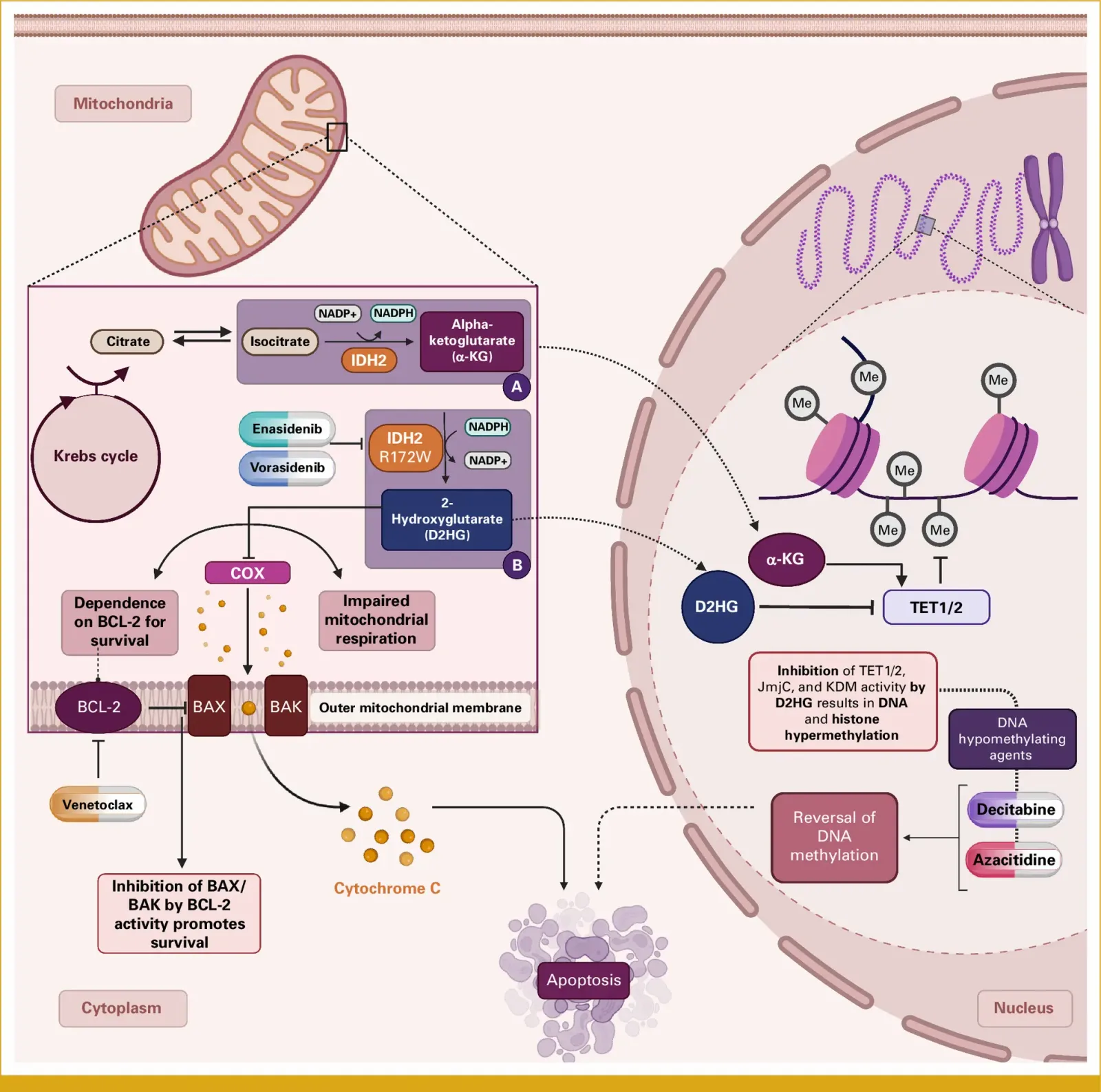
- IDH2 Mutation: A genetic fault in the IDH2 enzyme, which works in the cell's energy production cycle. Instead of the alpha-ketoglutarate it normally produces, the faulty enzyme starts producing a harmful molecule called 2-hydroxyglutarate (D2HG), which disrupts how genes are read and weakens the cell's respiratory machinery.
- Enasidenib: The smart drug that targets the IDH2 mutation directly. Because access to this drug was not possible for this patient, a treatment plan was built to strike the same biological weakness from a different angle.
- Venetoclax (BCL-2 inhibitor): Disables the BCL-2 protein that blocks the programmed death (apoptosis) of the cancer cell. Because their mitochondrial respiration is impaired, IDH2-mutant cells become more dependent on BCL-2 to survive, and that dependence turns them into an open target for venetoclax.
- Decitabine (DNA hypomethylating agent): Reverses the excessive methylation caused by the mutation, allowing silenced genes to be read again and strengthening the effect of venetoclax.
- A Tumor-Agnostic Approach: The combination of these two drugs was already in use in blood cancers such as IDH2-mutant acute myeloid leukemia. Since the same molecular mechanism was at work in this patient's biliary tract tumor, the treatment was adapted to it.
- Durable Response: The treatment produced marked tumor shrinkage and a significant improvement in the patient's clinical condition, and the response was maintained for 15 months.
In short, the tumor was assessed not by the name of the organ it came from but by the genetic alteration it carried, and a blood cancer regimen produced a durable response in biliary tract cancer. This case is a powerful example that treatment decisions can be based on the biology of the tumor rather than on the organ where the cancer started.
Publication Link: https://ascopubs.org/doi/10.1200/PO-24-00652
Images from the Publication