A First in Thoracic SMARCA4-Deficient Undifferentiated Tumor: Dual Immunotherapy Plus CDK4/6 Inhibition

In our patient with a chemorefractory, PD-L1-negative but high tumor mutational burden thoracic SMARCA4-deficient undifferentiated tumor, dual immunotherapy (pembrolizumab plus ipilimumab) was combined with the CDK4/6 inhibitor palbociclib for the first time, producing a partial metabolic response within 1.5 months.
May 19, 2026 — Our article documenting the partial response we achieved with a combination of dual immunotherapy and a CDK4/6 inhibitor in a rare tumor type, thoracic SMARCA4-deficient undifferentiated tumor (SMARCA4-UT), was published in the respected scientific journal "Frontiers in Immunology".
Why This Study Matters
SMARCA4-UT is a rare and aggressive cancer type that is usually seen in middle-aged men, has a strong association with smoking and is highly resistant to standard chemotherapy. Although immunotherapy (drugs that mobilize the immune system against cancer) has shown promise in this disease in recent years, it is still not clear which treatment is most effective, especially in patients whose tumors are negative for PD-L1, the protein that allows the immune system to recognize the tumor, and who carry complex genetic mutations.
Our study is important because it shows that in a SMARCA4-UT patient who did not respond to standard chemotherapy and whose tumor was PD-L1 negative but had a high tumor mutational burden (TMB-H), dual immunotherapy (pembrolizumab plus ipilimumab) and a drug targeting the cell cycle (the CDK4/6 inhibitor palbociclib) were used together successfully for the first time in the world.
Study Summary
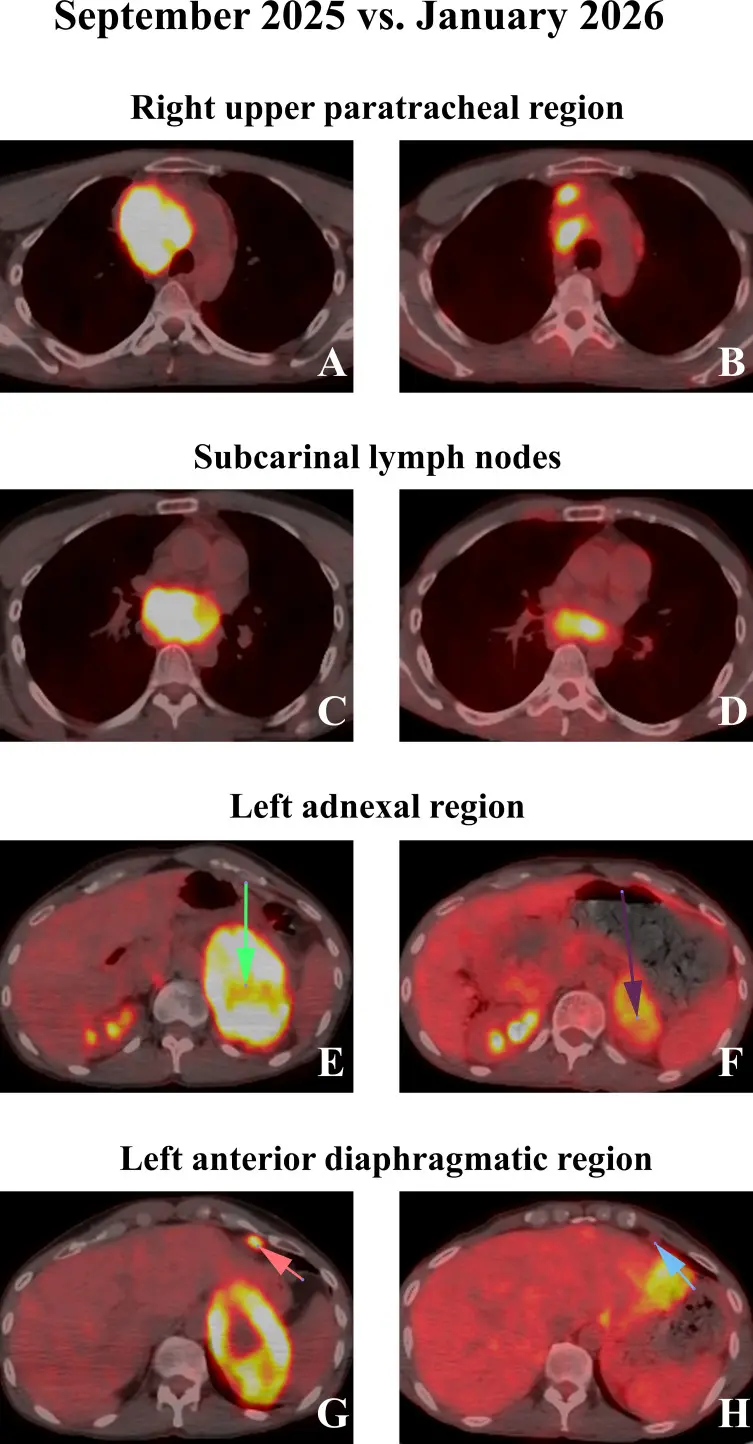
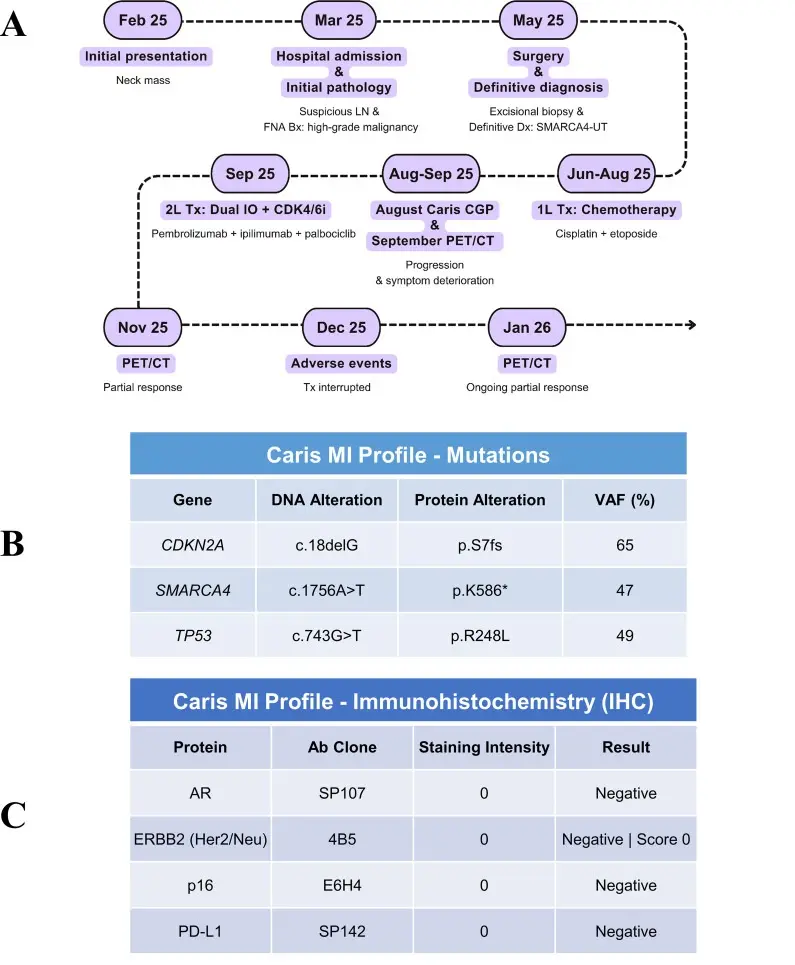
Our article presents the treatment course of our 37-year-old male patient who presented with a mass in his neck and was diagnosed with SMARCA4-UT after further investigation. The patient had not responded to the standard chemotherapy given initially, and his disease had progressed.
By mapping the genomic profile of the patient's tumor, our Molecular Tumor Board identified mutations driving tumor growth, such as those in the SMARCA4 and CDKN2A genes. Although the tumor was negative for PD-L1, the standard immunotherapy biomarker, it had a high tumor mutational burden (TMB-H) and a marked "smoker" genetic signature. The CDKN2A mutation also indicated a defect in the mechanisms that control cell division.
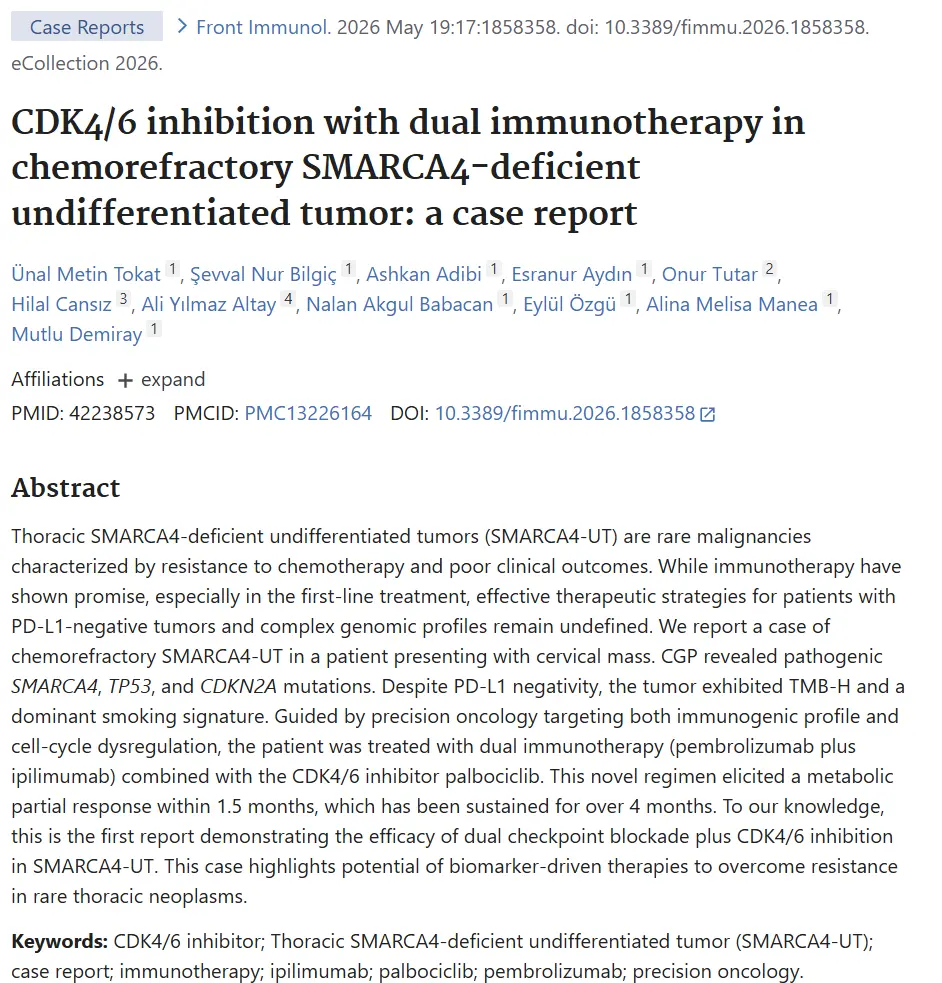
Targeting these findings, we applied an innovative triple combination consisting of dual immunotherapy, to stimulate the immune system strongly, and palbociclib, to halt cell division. Thanks to this personalized approach, we achieved a marked shrinkage of the patient's tumors (partial metabolic response) in only 1.5 months. Some immune-related side effects that developed during treatment (liver and cardiac involvement) were successfully managed by our team.
Key Takeaways
- Look beyond the standard tests: A detailed examination of the tumor's genomic profile can go beyond standard tests such as PD-L1 and reveal the tumor's weak points and which drugs it may respond to.
- A new ray of hope: In patients carrying mutations such as those in SMARCA4 and CDKN2A, using immunotherapy together with CDK4/6 inhibitors can be a new option once standard treatments are exhausted.
- A dynamic strategy in rare tumors: In rare and aggressive tumors such as SMARCA4-UT, developing innovative and dynamic treatment strategies based on patient-specific genetic data should be the standard approach.
Publication Link: https://www.frontiersin.org/journals/immunology/articles/10.3389/fimmu.2026.1858358/full
Images from the Publication