Next-Generation Drug Technologies: What Are ADCs (Antibody-Drug Conjugates)? The "Guided" Era in Cancer

A breakthrough new generation of "smart drugs," ADCs (Antibody-Drug Conjugates), deliver the power of chemotherapy directly to the address of the cancer cell. But how do these guided missiles work, and why are they not enough on their own?
In its fight against cancer, oncology has now reached technologies capable of telling friend from foe. ADC technology is one of the most powerful answers to this quest; yet our clinic's experience shows that even a flawless weapon needs the right "mind" to steer it, that is, genomic information.
1. The Evolution of Targeted Therapies in Cancer Treatment
For decades, in its battle against cancer, the world of oncology relied on very powerful but systemic (whole-body) weapons. While classic chemotherapies were successful at destroying rapidly dividing cancer cells, unfortunately they could not distinguish friend from foe and therefore also harmed healthy cells. This was the root cause of side effects that lower patients' quality of life — such as hair loss, a weakened immune system, and severe nausea.
The greatest dream of modern oncology has always been this: "Is a technology possible that can directly recognize and destroy the cancer cell while leaving healthy tissues untouched?" ADC (Antibody-Drug Conjugate) technology — one of the most advanced stages biotechnology has reached in targeted therapies — is among the most powerful answers to this quest.

2. Biological Engineering: How Does the ADC Mechanism Work?
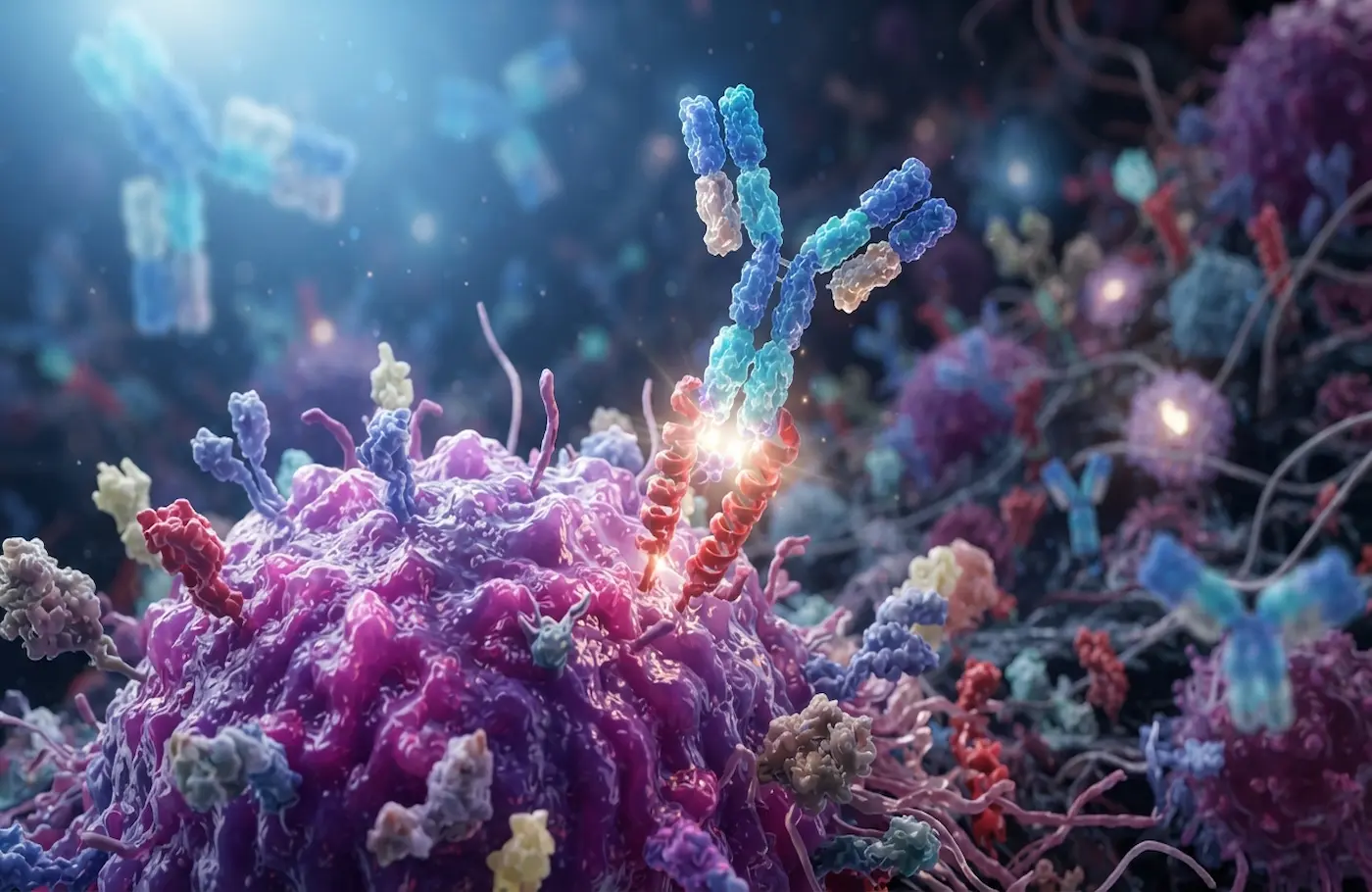
When we explain ADCs to our patients, we often use the metaphor of a "smart bomb" or a "guided missile." This technology consists of three fundamental components integrated into one another:
- Monoclonal Antibody (Navigation): The guiding captain, programmed to recognize a specific protein (antigen) on the surface of the cancer cell. It safely carries the drug through the bloodstream and locks it directly onto the target.
- Cytotoxic Payload (Warhead): The highly potent chemotherapeutic agent that will destroy the cancer from the inside.
- Linker (Safety Lock): The precise chemical bond that prevents the bomb from detonating while the drug passes through healthy tissues in circulation, but which dissolves and releases the payload once the guiding captain enters the cancer cell.
3. Technological Diversity and the Global Clinical Landscape
Today, an ADC wind is blowing through oncology congresses. Especially in breast cancer, ADCs targeting the HER2 and TROP2 proteins on the cell surface have rewritten treatment guidelines for advanced-stage patients. Not only in breast cancer, but also in small cell lung cancer and in some of the most challenging types such as platinum-resistant ovarian cancer, ADCs are rapidly entering standard treatment algorithms.
One of the greatest engineering achievements of these drugs is a feature called the "bystander effect." Tumors are heterogeneous (complex) structures; when an ADC finds its target and enters the cancer cell, the detonating warhead can leak through the cell membrane and also destroy neighboring cancer cells around it that do not carry the target protein.
However, there is one more fact our patients must know very clearly. Although ADCs are extremely promising in oncology, they are not entirely free of side effects and are not flawless "silver bullets." It must not be forgotten that these drugs, too, can cause serious systemic side effects in patients.
4. The Critical Limit: What Good Is a Flawless Missile with the Wrong Coordinates?
No matter how flawless it is biotechnologically, the success of an ADC depends entirely on finding that specific "biological address" on the surface of the cancer cell.
If the targeted antigen or receptor is not present in the patient's tumor biology, or has been analyzed incorrectly, then even the most advanced guided missile in the world will be ineffective. Giving a smart drug to a tumor that lacks the target is like the bomb landing on an empty field. This both leads to serious side effects and costs, and causes the irrecoverable loss of the patient's most precious asset — their "time."
5. The Cancer Cell's Ability to Camouflage and the Resistance It Develops to Smart Missiles (A Success Story from Our Clinic)
Although new generation ADC technologies are groundbreaking in oncology, cancer cells are extremely dynamic and can, over time, find a way to escape these smart missiles (a resistance mechanism). Indeed, a recent case study from our clinic, published in the respected medical journal Frontiers in Oncology (January 2025), demonstrates to the whole world how this labyrinth of resistance can be overcome through molecular mapping.
In our patient with advanced (metastatic) breast cancer, despite an initially tremendous response to treatment with a popular ADC (T-DXd), around the 9th month the tumor was observed to have developed resistance to the smart drug. Moreover, a new biopsy taken from the liver showed, according to standard pathology tests (IHC), that the cancer was now completely "HER2 Negative (Score 0)." In other words, according to the classic approach, the target had vanished and the smart-drug chapter was completely closed.
However, the Comprehensive Genomic Profiling (CGP) test we performed on the patient revealed a truth that standard tests could not see: through overexpression at the gene and mRNA levels, it was determined that the HER2 receptors were still being fueled through the very same target. The reason standard IHC tests failed to show the HER2 receptor was most likely tumor heterogeneity: that is, not every point of the cancer mass being identically structured, and the sampled piece not representing the tumor as a whole.
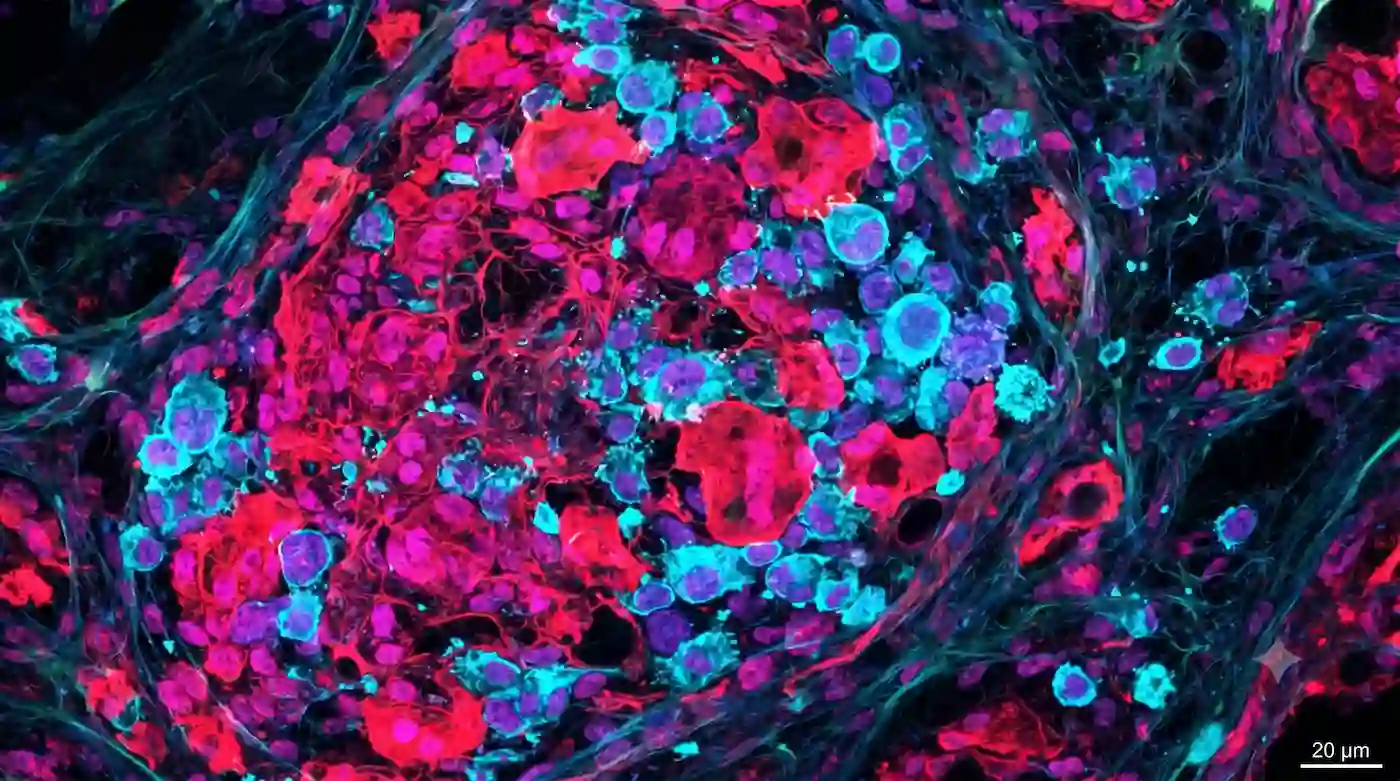
By evaluating this "genomic intelligence" obtained by our Molecular Tumor Board, and thanks to a personalized cellular-blockade therapy designed beyond the guidelines (a combination of Neratinib + Fulvestrant + Paclitaxel), a near-complete clinical success was once again achieved in the liver metastases that had resisted the smart missile.
6. Conclusion: The Real Paradigm Shift Is Genomically Informed Treatment Design
The new generation of smart drugs in medicine are tremendous weapons; but they need a "mind" to steer them correctly. The truly great paradigm shift in oncology is not merely the invention of a new drug, but knowing at the molecular level in which patient, at what time, and in which combination that drug will work.
To match the right patient with the right treatment and not waste that precious time, a well-equipped Molecular Tumor Board is essential — one that performs Comprehensive Genomic Profiling (CGP) in an internationally standardized and validated laboratory, and combines the vast data that emerges with the patient's clinical picture to chart a personalized treatment route.
It must not be forgotten: in cancer treatment there is no room for chance, only a biological map that has been read correctly.
To evaluate treatment options and smart-drug applications specific to your tumor biology, you can contact our clinic.
References and Further Reading
- Our Clinical Case Study (Real-World Evidence): Tokat, U. M., Adibi, A., Aydın, E., Bilgiç, Ş. N., Özgü, E., Tutar, O., & Demiray, M. (2025). Case report: Near-complete response to neratinib-based treatment in HR-positive HER2-amplified metastatic breast cancer refractory to trastuzumab deruxtecan. Frontiers in Oncology, 14, 1484750.
- DESTINY-Breast Studies: Modi, S., et al. (2022). Trastuzumab deruxtecan in previously treated HER2-low advanced breast cancer (DESTINY-Breast04). The New England Journal of Medicine, 387(1), 9-20.
- ADC Resistance and Cancer Cell Evolution: Mosele, F., et al. (2023). Trastuzumab deruxtecan in metastatic breast cancer with variable HER2 expression: the phase 2 DAISY trial. Nature Medicine, 29, 2110-2120.
- Comprehensive Genomic Profiling and Targeted Therapies in Oncology: Gao, J., et al. (2013). Integrative analysis of complex cancer genomics and clinical profiles using the cBioPortal. Science Signaling, 6(269), pl1.