Prof. Dr. Mutlu DemirayMedical OncologyIn short videos we explain the foundations of personalized oncology, how the genomic process works, and real patient experiences.

Change and progress in liquid biopsies are advancing at a dizzying pace, and the future will be built on them. Despite very serious advances today, the prevailing view is to perform a liquid biopsy when a tissue biopsy cannot be obtained from the patient. However, if the patient's disease burden is low — that is, few metastases and a small tumor — liquid biopsies generally fail in these cases. But if the tumor is large and there are many metastases, liquid biopsies are almost as effective as tissue biopsies in these patients. For this reason, if a liquid biopsy is to be chosen or if taking a biopsy is problematic, the decision on comprehensive genomic profiling should be made after obtaining a second opinion from an experienced center. With liquid biopsies, insufficient DNA yield and incomplete results can occur.
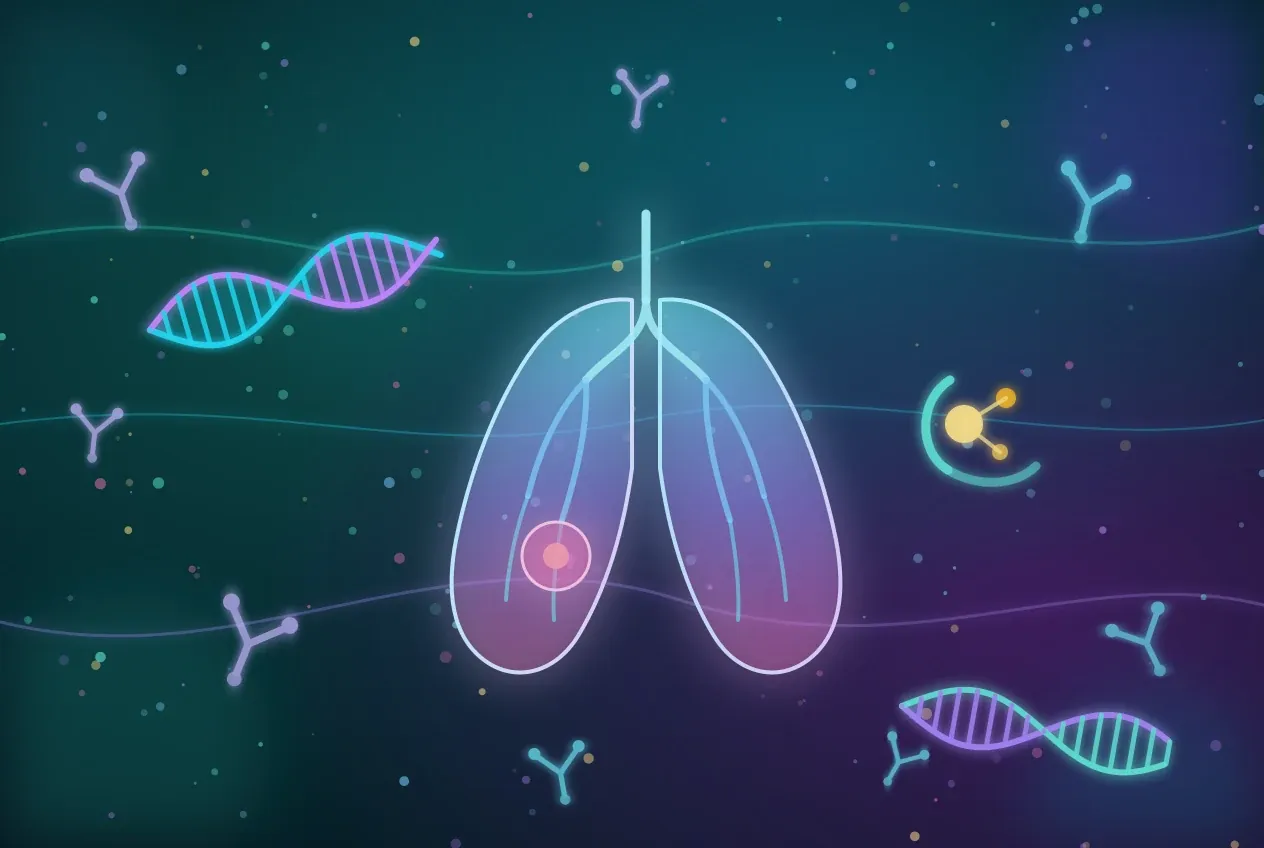
Comprehensive genomic profiling tests can be performed by analyzing the cancerous tissue or by isolating and analyzing tumor DNA fragments from the blood.
Today, analyses performed on cancerous tissue are still more prominent. However, in the near future they will largely be possible from blood as well.
First, analysis through a biopsy of the cancerous tissue should be preferred. If the patient has received many treatments without response, the most accurate method is to perform a new biopsy and analyze the genomics of the most recently developed tumor. Genomic profiling obtained from the two-year-old tissue of a patient who was operated on two years ago and has received many treatments may give incomplete or incorrect information, because mutations can change over time. Performing comprehensive genomic profiling with a biopsy taken from the tumor in its most recent state is the most accurate path.
A cancer patient at any stage may wish to obtain this information; that is, a person who has had cancer has the right to learn their cancer biology. However, as a highly experienced physician, I recommend it to my patients at stages 3 and 4 — that is, in situations where I can change the treatment or determine it based on this test. Yet sometimes my patients request it at an early stage as well, and we can provide this service to them too. Still, the role of comprehensive genomic profiling tests in determining treatment is smaller in early-stage cancers than in advanced stages.
In personalized cancer treatment based on comprehensive genomic profiling, what determines the treatment is the change in cancer biology and how the interventions targeting it will be carried out. As those who design personalized cancer treatment, while designing it we focus on points such as how we can touch our patient's life and how we can achieve better results. Being able to design the treatment is the greatest joy. Only after that should insurance systems be considered. Today's reimbursement systems are not yet organized around personalized cancer treatments. However, once the scientific rationale and evidence are presented, positive responses can be obtained when applying to reimbursement institutions.
Determining the treatment comes first.
Absolutely. Getting a second opinion is very useful in every case — for surgery, for cancer treatment, that is, for many health matters. As a result of comprehensive genomic profiling tests, you can obtain an opinion as a curation report both from abroad and from the Medicana Personalized Cancer Treatment Center. Your physician can even obtain a second opinion from specialized platforms.
The purpose of these tests is not to recommend a treatment directly. These tests give you the mutations, the changed molecular structures and the changed biology. Analyzing these and designing the treatment is the job of the molecular tumor board. So there is no such thing as 'I had the test done and no targeted treatment came out.' Just as learning the tumor biology can determine what will be done, determining what will not be done is also important.
For this reason, it is best to also request a curation report from your physician as the result of the test.
In our country it is performed in limited numbers as comprehensive genomic mapping, but I believe their numbers will increase soon. However, such a test is not yet available within the coverage of reimbursement institutions in our country.
Tests with narrower panels are performed at many of our universities and state hospitals.
You are quite right about this. Essentially, what determines a test's price is whether the test is approved and the genomic analysis technique. That is, the prices of tests performing comprehensive genomic analysis are above a certain level, and there are no very serious differences among these tests. What matters is the evaluation of these tests. The personalized cancer treatment experience at the center you attend is important. Basically, choosing the test recommended by your physician will be the most cost-effective path. However, if you had comprehensive genomic profiling done at your own request, it would be best to consult an experienced center and request a curation report as a result.
Essentially this depends on your purpose. If there is a molecular tumor board at the center where you are treated and it will be evaluated by an experienced team, the most accurate decision will be made with comprehensive genomic profiling — that is, tests in which every point of more than 300 genes is analyzed and whose accuracy is scientifically proven.
However, if these resources are not available, or by your or your physician's preference, treatment decisions can also be made with narrower-scope tests. The mutations detected with these tests are also important in personalized treatment. But if no mutation is detected, this does not mean you are unsuitable for personalized treatment. The claim 'no gene came out, so I'm not suitable for this approach' is incorrect. It means no mutation was found in the analyzed gene regions. Cancer does not develop without a mutation; there must have been some alteration for cancer to develop. In this case, comprehensive genomic analyses should be performed.
In addition, among these tests there are also differences in price and in whether they fall within the coverage of reimbursement institutions.
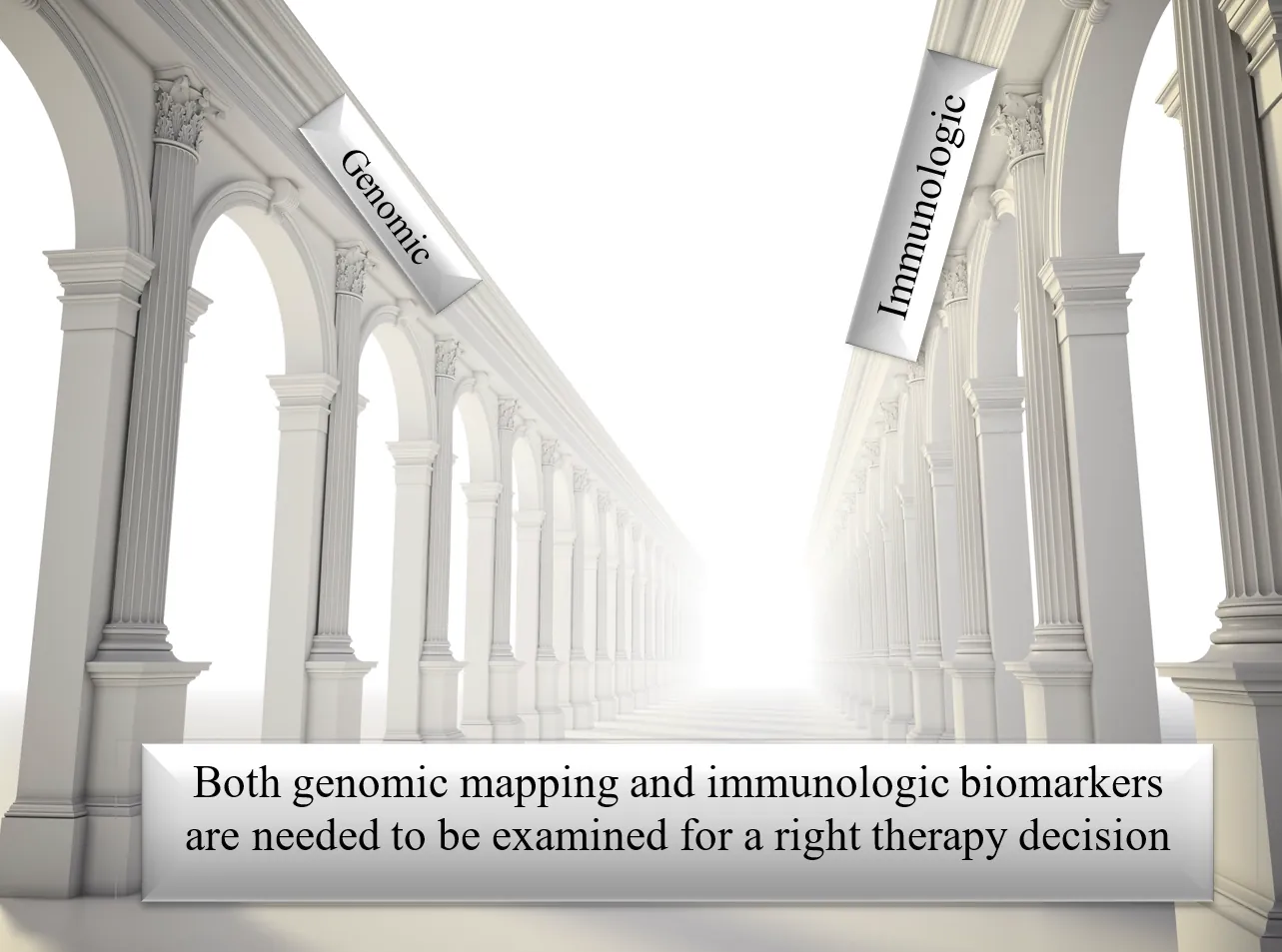
First, the genetic information disrupted in your cancer must be revealed. For this reason, 'Comprehensive Genomic Profiling' must be performed. Here, all the information-producing — that is, protein-coding — points of roughly 300 to 600 genes must be evaluated. That is, not an analysis of targeted regions, but sequencing of the entire exon must be performed. After this sequencing, it must be evaluated by an approved and accepted bioinformatics specialist. Understanding and interpreting the detailed technical data here is, as you can appreciate, difficult. Therefore, if personalized treatment is to be carried out in cancer, I recommend having your test done after obtaining opinions from at least two experienced sources.
The purpose of these tests is not a direct treatment recommendation. It is to arrange a patient-specific treatment by learning the disrupted mechanisms and biology in the cancer. For this reason, cancer biologists work at personalized cancer treatment centers.
It means your cancer treatment is based on the genetic characteristics of your cancer.
Genes make up the body of information that decides how the cells in our body will grow, develop and perform their functions. Disorders in this information determine the biology of cancers. In cancer, a disorder has occurred in this information. Revealing the faulty information of the cancerous tissue, learning its biology, and arranging treatment according to the disrupted cancer biology is called 'Precision Medicine.'
Personalized and precisely designed cancer treatments can cause fewer side effects than classical conventional chemotherapies. This is thought to be because the treatment is arranged specifically for the tumor. Since personalized cancer treatments are designed more toward the tumor, they may affect normal cells less.