
Liquid Biopsy and MRD in Breast Cancer Follow-Up: Detecting a Not-Yet-Visible Recurrence in the Blood Months in Advance

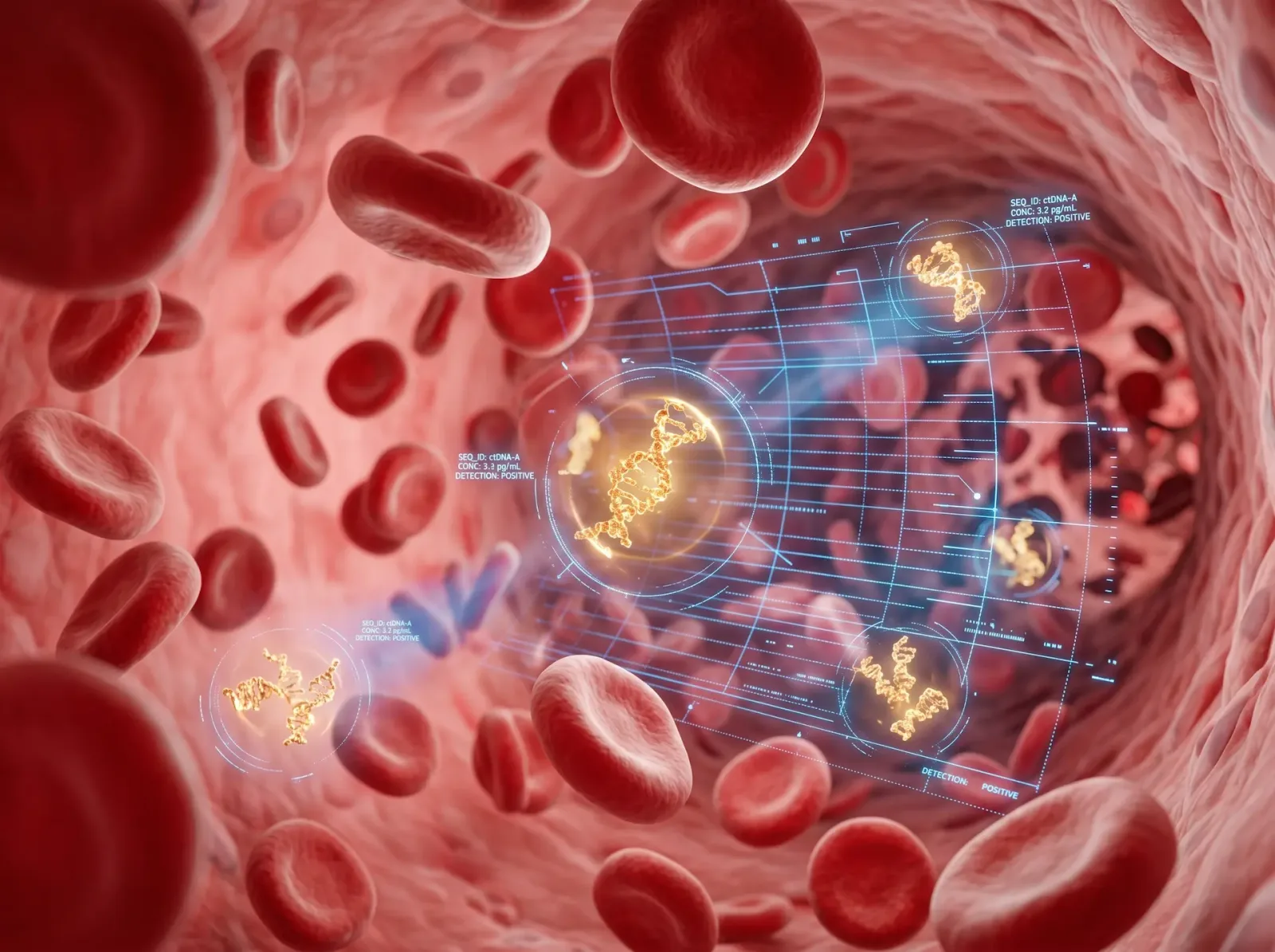
A comprehensive clinical study published in Journal of Clinical Oncology Precision Oncology has shown that Molecular Residual Disease (MRD) analyses performed on blood after treatment for early-stage breast cancer have high predictive ability and clinical value in detecting the risk of disease recurrence (relapse) months in advance. In patients with early-stage breast cancer who have completed surgery and chemotherapy, it was scientifically confirmed that, thanks to the monitoring of circulating tumor DNA (ctDNA) in the blood, metastatic recurrences can be detected long before they appear on radiological imaging.
1. An Early Warning System for Breast Cancer: Liquid Biopsy Without the Need for Tumor Tissue
One of the greatest concerns in breast cancer treatment is that, even when the initial treatments are completed successfully, micrometastases invisible to the eye may remain in the body and the disease may recur years later. In this research, based on 2-year data from the SUCCESS-A study conducted under the umbrella of the American Society of Clinical Oncology (ASCO), blood samples from 313 patients with early-stage breast cancer who remained disease-free after chemotherapy were examined with a liquid biopsy method applied without the need for tumor tissue (tissue-free).
The notable results of the study are as follows:
- Early Detection Months in Advance: Metastatic recurrence subsequently developed in 94.4% of patients in whom ctDNA (MRD) positivity was detected by liquid biopsy. The test gave warning of metastasis an average of 7.9 months before it appeared on scans (PET-CT, MRI, etc.).
- High Specificity (99.6%): The test's false alarm rate was found to be extremely low; in 99.6% of patients who did not develop a recurrence, the test was completely negative.
- The Advantage of a Test That Does Not Require Tumor Tissue: The greatest strength of this method is that it does not require the patient's archived tumor tissue block. Especially for patients whose tumor disappeared completely after neoadjuvant (pre-surgery) chemotherapy (pathological complete response) or whose tissue sample has been exhausted, this methylation-based molecular analysis performed on blood offers an important convenience.
2. Breast Cancer Recurrence Risk and MRD by Subtype
Breast cancer is not a single, homogeneous disease; it is divided into different biological subtypes such as Triple-Negative Breast Cancer (TNBC), Hormone Receptor-Positive (HR+/HER2-) Breast Cancer and HER2-Positive Breast Cancer. The study also revealed the dynamics of MRD monitoring with liquid biopsy in these subtypes:
- Triple-Negative Breast Cancer (TNBC): In patients with TNBC, which biologically follows a faster course, the sensitivity of ctDNA tests performed in the year before recurrence was found to be 100%. The MRD signal detected in the blood makes fast and early intervention possible in this aggressive type.
- Hormone Receptor-Positive (HR+/HER2-) Breast Cancer: Because recurrences in this group can appear even years later, regular liquid biopsy monitoring plays a critical role in catching late recurrences and resistance mutations such as ESR1 that may develop against endocrine (hormone) therapies.
3. Our Clinic's Experience with MRD and Liquid Biopsy in Breast Cancer Follow-Up
This published study provides very important data for the world of oncology. At our clinic, we use MRD (Molecular Residual Disease) and liquid biopsy technologies in the follow-up of our breast cancer patients who are suitable candidates.
As a center that has examined the tumor tissue of more than 2,500 patients with Comprehensive Genomic Profiling (CGP) to date, we know very well that the success of treatment in breast cancer does not end with surgery and chemotherapy alone. The molecular follow-up approach we apply at our clinic rests on the following foundations:

- 360-Degree Molecular Mapping: At the time of initial diagnosis, we examine our patients' tumors not only with narrow panels but with the most comprehensive tests available, such as Whole Exome Sequencing (WES) and Whole Transcriptome Sequencing (WTS). We map out all of the tumor's weak points and its genetic code.
- MRD (Molecular Residual Disease) Monitoring: We follow up suitable breast cancer patients whose treatment has been completed with advanced MRD tests that search for traces of the disease at the molecular level. During this monitoring, if the patient's archived tumor tissue is available, we also actively use tests that take this tissue directly as a reference (tumor-informed); where tissue is unavailable or insufficient, we make use of blood-based (tissue-free) analyses. With the deep experience we have in both MRD monitoring methods, our main goal is to catch recurrence early at the cellular level, before metastasis has spread to organs and become visible on scans.
- Identifying Resistance Clones and Early Intervention: When MRD positivity is detected in the blood, we first perform a new genetic test for the patient to identify the resistance clones the disease has developed. Our Molecular Tumor Board, led by Prof. Dr. Mutlu Demiray and made up of 6 specialist cancer geneticists and our experienced team of physicians, then analyzes these resistance clones in depth. By identifying the smart drugs and combination therapies that can be used against these new targets, we aim to bring the disease under control while it is still at the molecular level, without waiting for visible progression on scans.
Conclusion
Catching a possible breast cancer recurrence early, while it is still at the cellular level, and being able to intervene one step ahead of the disease depends on using technology and molecular data at the right time. By correctly reading these cellular codes hidden in the blood, we continue to offer our patients a safer, evidence-based and personalized follow-up process.
To learn more about molecular monitoring with MRD and liquid biopsy in breast cancer, you can contact our clinic.
Sources and Further Reading
- SUCCESS-A Study: Friedl, T. W. P., Fasching, P. A., Hartkopf, A. D., Tesch, H., Lorenz, R., Heinrich, G., ... & Janni, W. (2026). Clinical Relevance of Post-Treatment Circulating Tumor DNA Detection in Early Breast Cancer Using a Tissue-Free Epigenomic Assay: A 2-Year Landmark Analysis. JCO Precision Oncology, 10, e2600095.