A New Millennium in Pharmacology: From the Human Genome Project to Conquering "Undruggable" Cancer Mutations

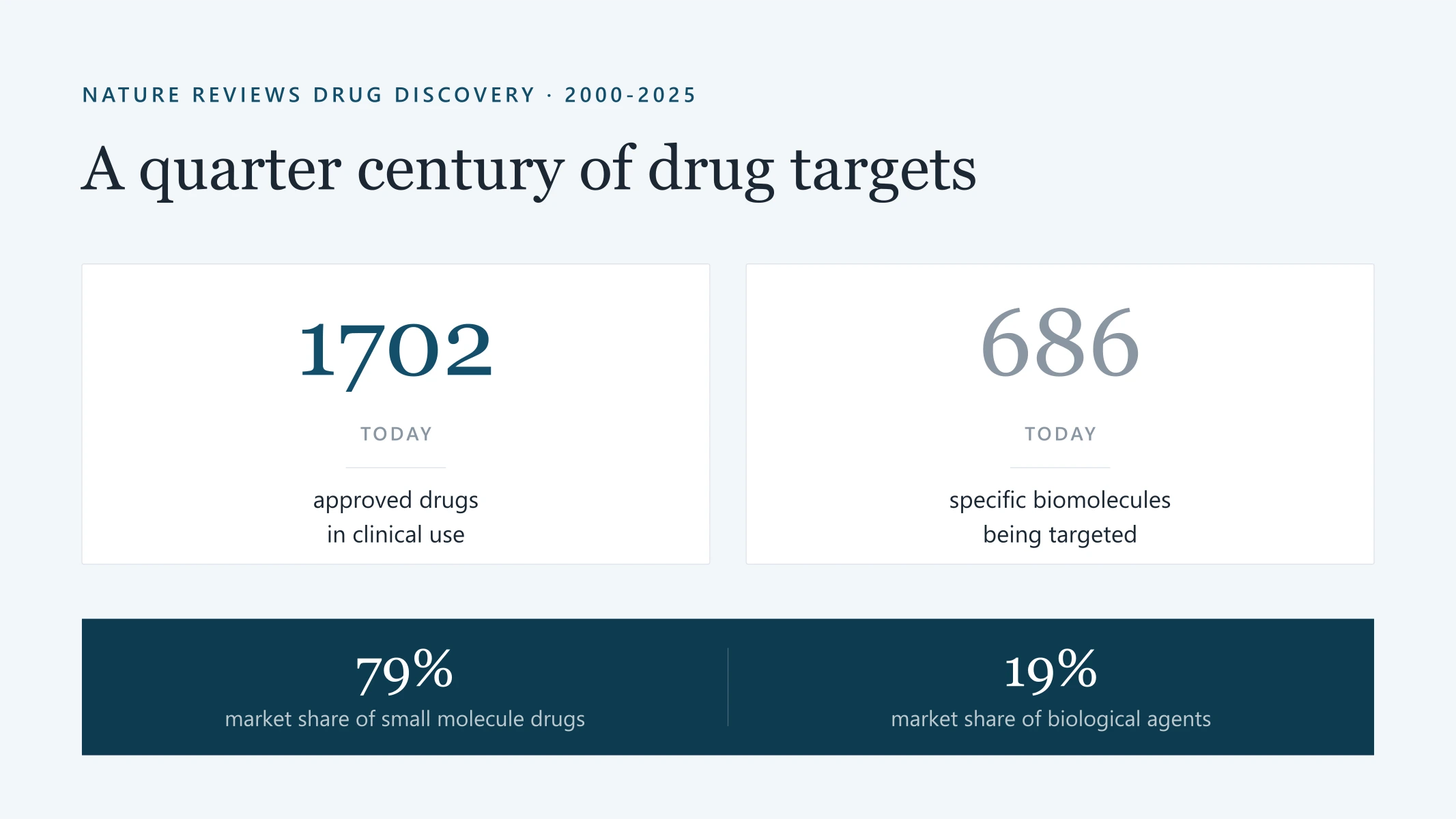
The publication of the first draft of the Human Genome Project in 2000 opened the way for genetic and cellular technologies in modern drug discovery and laid the foundation for an unprecedented revolution in treatment. A comprehensive analysis published in Nature Reviews Drug Discovery (2026), one of the world's most prestigious scientific journals, uses data to show how drugs and cellular targets diversified over the quarter century between 2000 and 2025. According to this study, the 1702 approved drugs in clinical use today target 686 specific biomolecules, changing the course of disease at the cellular level. The largest share of these expanding treatment options belongs to cancer and immune system drugs (oncology and immunology) that suppress cell division cycles and tumor growth signals. In this article, we explain this transformation, from kinase inhibitors to antibody-drug conjugates, and the role of the Molecular Tumor Board in choosing the right treatment for each patient from an ever-growing drug pool.
1. The Rise of Kinase Inhibitors and Cell Surface Receptors
Over the past 25 years, the validation of enzymes, and especially of structures called "protein kinases", as treatment targets created a structural revolution in cancer. In a process that began with the approval of imatinib in 2001, there are now 136 approved smart drugs targeting 67 different kinases. Receptors located on the cell surface in particular have become critical targets for cutting off the tumor's growth signals.
For example, the EGFR protein, a cellular receptor, was targeted by a single small molecule drug in 2002; today it can be targeted by 10 different small molecule smart drugs and 4 different monoclonal antibodies (immune system proteins produced in the laboratory).
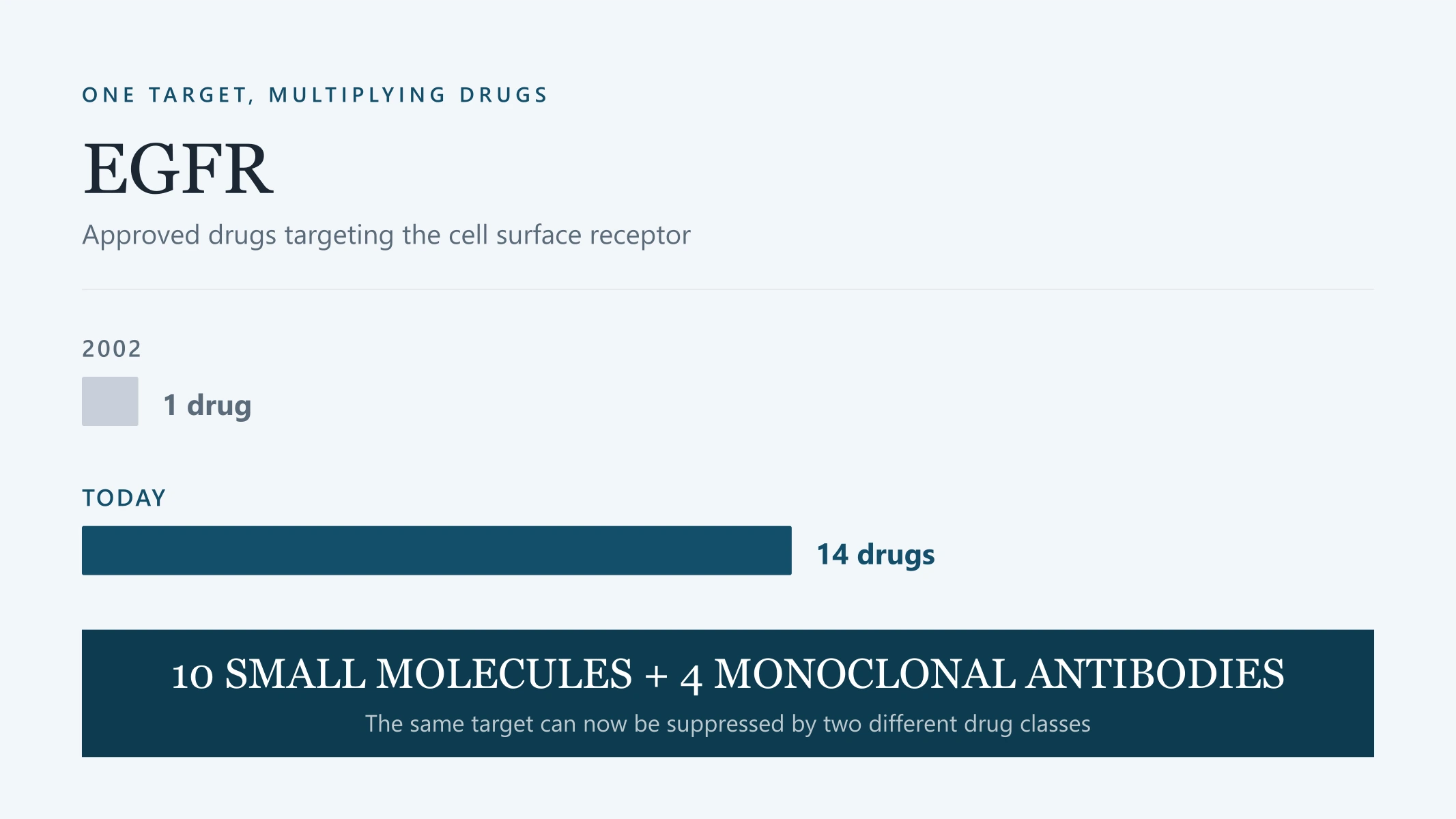
Similarly, the HER2 protein has become a multifaceted target that can now be suppressed simultaneously by small molecule pills, antibodies and antibody-drug conjugates (ADCs).
2. From Small Molecules to Smart Biological Missiles
Modern drug discovery did not merely increase the number of targets; it also produced entirely new drug delivery systems to overcome cellular barriers. Small molecule drugs in pill form, which have historically dominated the market (79% of the total market), retain their advantage in crossing the cell membrane to reach targets inside the cell.
The real leap of recent years, however, has come from "biological agents" (19% of the total market), which lock onto targets outside the cell with unique pinpoint precision. While antibody-drug conjugates (ADCs) are rewriting the standards of oncology as "smart missiles" that release their chemotherapy payload directly into the tumor cell, new generation RNA therapies (siRNA and ASO) that work as gene silencers have succeeded in targeting genetic structures that until recently were considered "undruggable". As targeted protein degraders (PROTACs) and CRISPR-based gene editing therapies become widespread in the future, the boundaries of classical pharmacology will disappear entirely.
3. The Role of the Molecular Tumor Board (MTB) in an Expanding Drug Pool
Every year, health authorities around the world such as the FDA and EMA approve dozens of new drugs against an average of 15 new specific cellular targets. Choosing the right treatment for patients from such a rapidly growing and constantly updated global pool requires a high level of scientific molecular detective work that goes beyond standard protocols.
At our clinic, the Comprehensive Genomic Profiling (CGP) data obtained from our patients are analyzed by our expert cancer geneticists and our Molecular Tumor Board (MTB) by integrating them with precisely these vast medical databases. By examining the current clinical results and resistance mechanisms of a detected mutation, the most up-to-date smart drug, monoclonal antibody or ADC combination that will intervene in the tumor's active growth pathway is determined with a patient-specific written curation report. Our goal is to take our patients beyond conventional routines through genomic mapping and bring them together with these most advanced molecules that science has to offer.
Important Information: Many of the new generation smart drugs and immunotherapies identified by our Molecular Tumor Board as a result of molecular genetic testing, whose pharmacological classes are described above, have been approved by the U.S. Food and Drug Administration (FDA) and included in international guidelines. However, the official licensing status of these drugs in Türkiye and the reimbursement conditions of the Social Security Institution (SGK) may vary depending on the active substance. Our clinic plans the legal procurement procedures and clinical accessibility aspects of innovative treatments transparently with our patients.
To learn more about Comprehensive Genomic Profiling and personalized treatment planning, you can contact our clinic.
References and Further Reading
- The Changing Map of Drug Targets: Halip, L., Avram, S., Overington, J. P., Al-Lazikani, B., Curpan, R., Sirimulla, S., Pushechnikov, A., Beccari, A. R., Savchuck, N., & Oprea, T. I. (2026). The evolving landscape of drug targets. Nature Reviews Drug Discovery. DOI: 10.1038/s41573-026-01530-3