Pan-Cancer Analysis of Rare BRAF Mutations: Potential Sensitivity to EGFR-Targeted Treatments

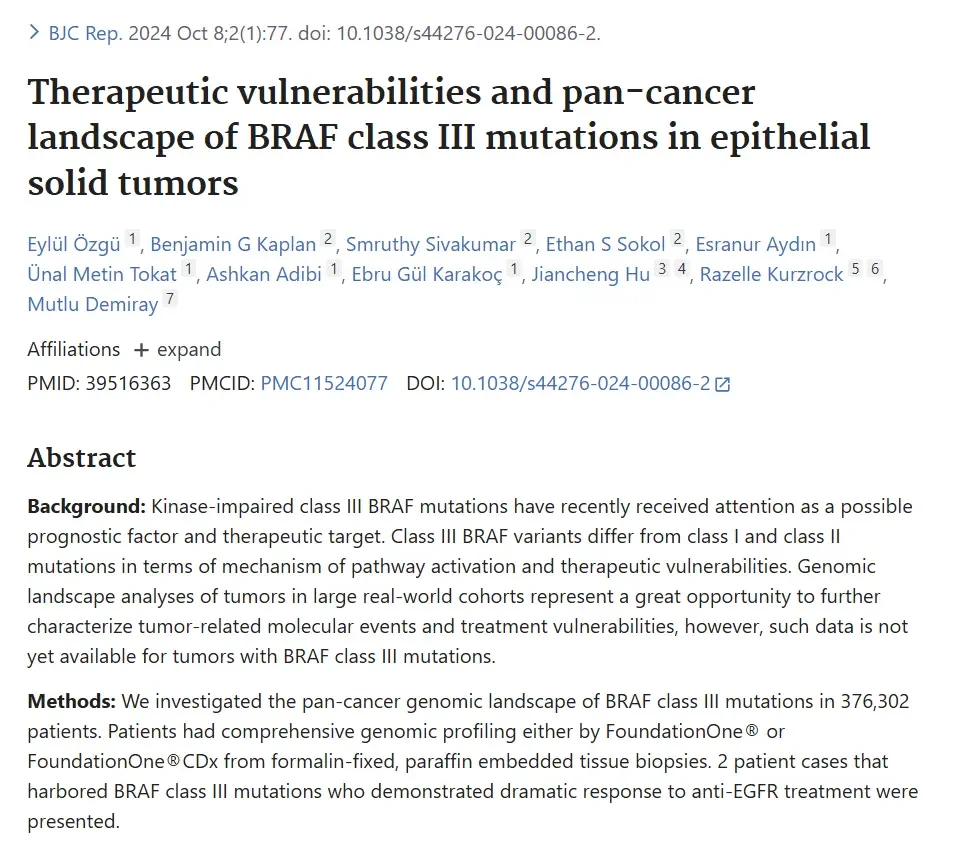
The genomic data of 376,302 cancer patients were examined to map the pan-cancer landscape of class III BRAF mutations. Alterations conferring resistance to EGFR-targeted drugs proved to be less frequent in these tumors, and two patients achieved long-lasting responses with EGFR-targeted treatment.
October 8, 2024 — This pan-cancer analysis, prepared and published by Prof. Dr. Mutlu Demiray and his team, appeared in BJC Reports as the study that characterizes a rare class of BRAF mutations in a very large patient cohort.
Key Points of the Study
This study shows that the alterations gathered under the heading "BRAF mutation" are not all alike, and that a little-known subgroup carries a treatment opportunity of its own:
- Class III BRAF Mutations: A subgroup that behaves differently from the widely known BRAF V600 mutations. These alterations do not increase the activity of the BRAF enzyme itself but weaken it, and yet they keep the growth pathway running by making the cell more dependent on upstream signals. This difference in behavior means the treatment has to be built around a different point as well.
- Pan-Cancer Analysis: Comprehensive genomic profiling data from 376,302 patients were examined. That scale made it possible to describe, for the first time on a broad scale, the molecular features of class III mutations, which are too rare to be studied adequately within individual cancer types.
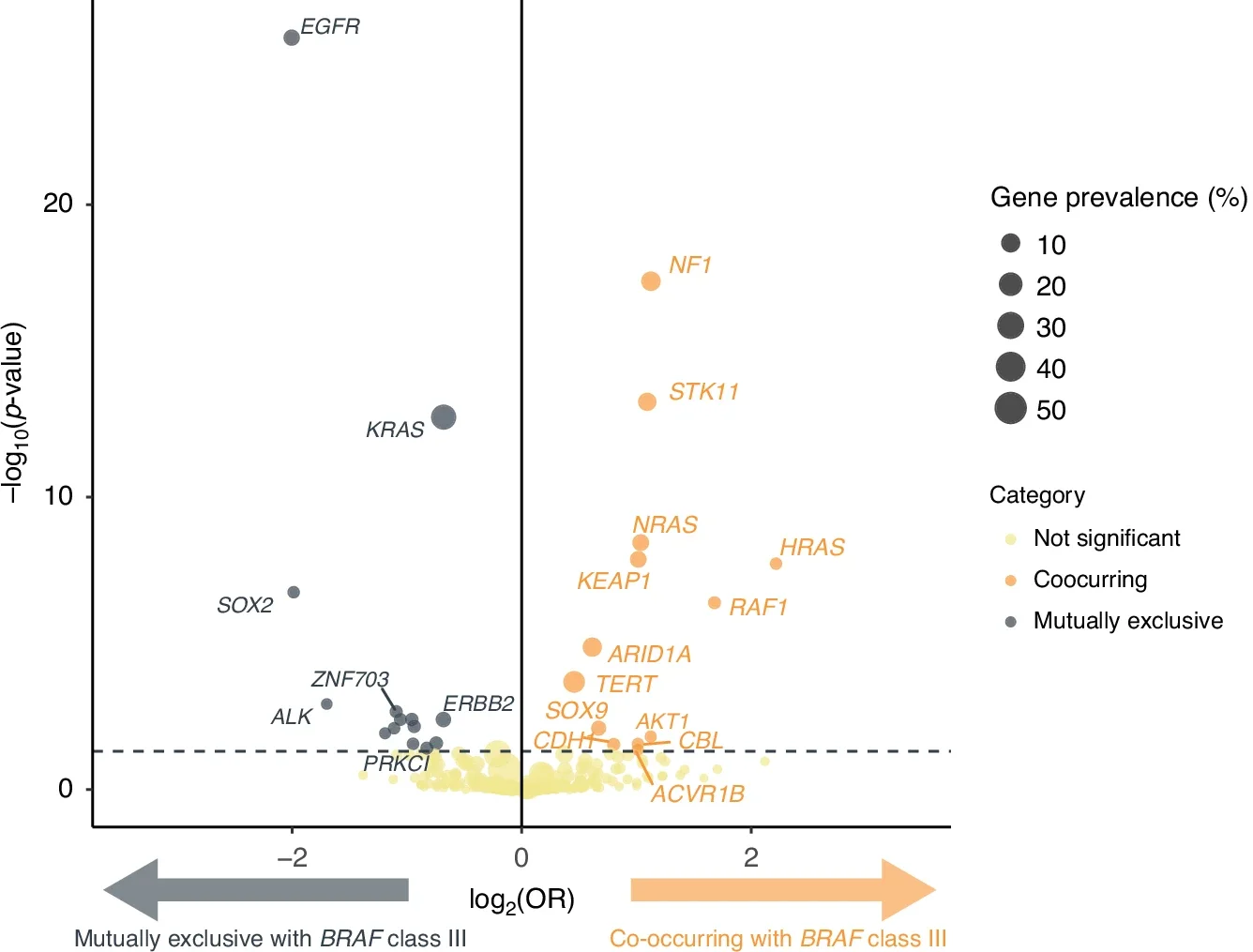
- A Map of Co-Occurring Alterations: The study identified which genetic alterations are found together with class III BRAF mutations and which ones almost never accompany them. The markedly lower frequency of EGFR and KRAS alterations in these tumors is what turned the finding toward treatment.
- Sensitivity to EGFR-Targeted Treatment: Because alterations that confer resistance to EGFR-targeted drugs were less common, class III BRAF-mutant tumors may carry a particular sensitivity to these treatments.
- Clinical Confirmation in Two Patients: Guided by this molecular finding, EGFR-targeted treatment was given to two patients, one with colorectal cancer and one with biliary tract cancer, and both achieved remarkable, long-lasting responses.
The study therefore did more than characterize rare class III BRAF mutations in a large patient cohort. It also showed that these mutations may represent not only a prognostic marker but a concrete treatment opportunity.
Publication Link: https://www.nature.com/articles/s44276-024-00086-2
Images from the Publication