
Side Effect Management in Personalized Oncology: The Power of Genetic Guidance and Clinical Experience

In personalized oncology, the management of side effects rests on a biologically different foundation from the clinical picture created by conventional chemotherapy. Conventional chemotherapies target the cycles of cell division and produce a strong, systemic effect, whereas the smart drugs (targeted therapies) used in personalized oncology lock directly onto the genetic errors in the cancer cell. This does not mean that new generation treatments are entirely free of side effects; it means that the character of those side effects, how predictable they are and the strategies for managing them clinically have changed fundamentally. In this article we explain why side effects stem from the nature of the target, how pharmacogenomic analyses guide dosing decisions, and how at our clinic we manage side effects by anticipating them in advance rather than at the moment of crisis.
1. The Decisive Role of Clinical Experience
Anticipating and correctly managing the side effects of new generation smart drugs and immunotherapies is a process that depends entirely on clinical experience. The more intensively a clinic uses these targeted therapies, the deeper the reflexes and expertise it gains in resolving the toxicities patients may face.
With an accumulated experience of more than 2,500 cases, our clinic has unique expertise in targeted smart drugs, in immunotherapies and, above all, in the rational combination therapies we design to break the resistance of cancer.
2. Effects Arising From the Nature of the Target (On-Target Effects)
Smart drugs are designed to stop a specific protein that drives the growth of cancer. However, these target proteins can also be present, even if in small amounts, in our healthy tissues. For this reason, targeted therapies cause not so much systemic fatigue or severe nausea as specific side effects linked to the role that the receptor they lock onto plays in healthy tissues.
- Drugs targeting EGFR: Because the EGFR protein is also found in healthy skin cells, patients may develop acne-like skin rashes.
- Drugs that block blood vessel formation (VEGF): While cutting off the tumor's blood supply, they also impair the repair of healthy vessel walls and can therefore lead to high blood pressure and bleeding.
- Tyrosine kinase inhibitors (TKIs): Certain TKIs can affect the intestinal mucosa and cause diarrhea.
- Immunotherapies: While the immune system is activated against the cancer, in rare cases autoimmune-like reactions against the body's own healthy tissues may also develop.
3. Pharmacogenomic Analysis and Dose Optimization
When planning treatment, the Molecular Tumor Board (MTB) at our clinic aims to anticipate side effects in advance and act proactively by looking at the patient's genetic map, rather than resolving them at the moment of crisis.
Today, vital genetic (germline) data on how a patient will metabolize drugs can be obtained not only from tumor tissue but also through liquid biopsy tests performed on cell-free DNA (cfDNA) taken from the blood (for example Guardant360). With an accuracy as high as 96.3% compared with PCR-based methods, these pharmacogenomic analyses reveal the genetic variants that directly modulate the risk of toxicity or hypersensitivity to cancer drugs:
- The CYP2D6 gene: Allelic variations in this gene alter the activity of the enzyme and directly affect the therapeutic dosing of drugs such as tamoxifen and gefitinib.
- The DPYD gene: Changes in DPYD alleles reduce or completely abolish enzyme activity and lead to serious toxicity in the patient against fluoropyrimidine chemotherapeutics.
- The UGT1A1 gene: Specific alleles of this gene (for example ∗6, ∗27, ∗28) can affect the metabolism of treatments such as FOLFIRI, irinotecan, SN-38 and sacituzumab govitecan, which contains these agents in its structure, and thereby increase the risk of toxicity.
- The TPMT and HLA-B genes: Allelic changes in the TPMT gene impair enzyme function with thiopurine drugs and increase the risk of toxicity, while the detection of the HLA-B∗57:01 allele in particular indicates that the patient carries a high risk of hypersensitivity to the drug in question.
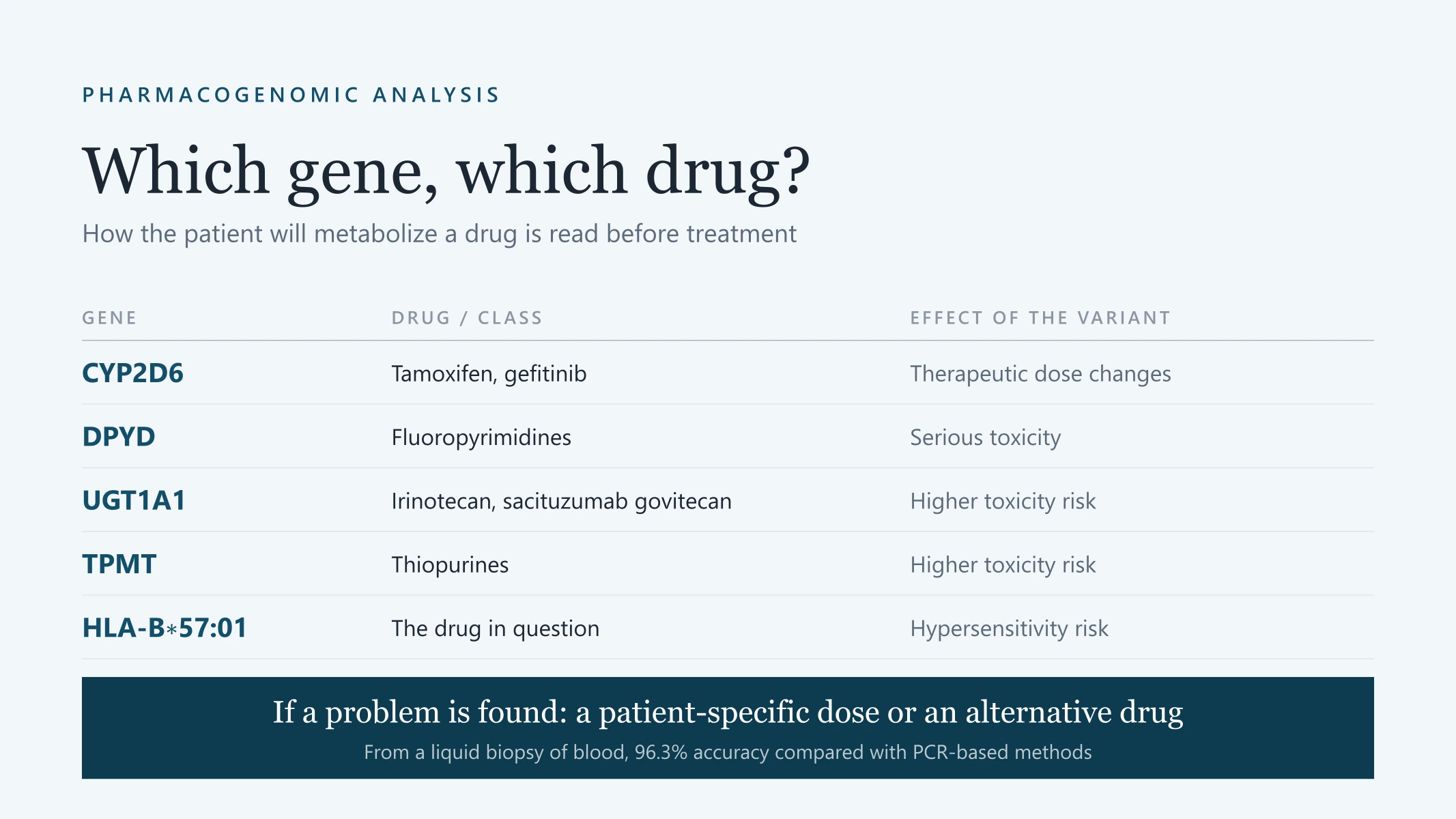
If a problem or deficiency is found in these drug-metabolizing enzymes in a patient's genetic makeup, then rather than adhering blindly to standard dosing schedules, it becomes essential for us to carry out a dose adjustment (optimization) tailored to the patient.
4. Proactive Intervention and Individualized (N-of-One) Monitoring
Guided by our clinical experience and pharmacogenomic analyses, side effect management at our clinic never works on a "wait and see" basis. Before the drug is given to the patient, proactive protective protocols against possible side effects are put in place. This is how the N-of-One approach, in which every patient is approached through their own biology, translates into side effect management.
- Preventive protection: For example, when starting a treatment that is expected to cause skin rash, protective dermatological creams and antibiotics are prescribed at the same time, before the problem appears.
- Close monitoring during immunotherapy: Against the risk of autoimmune-like reactions the body may develop against its own healthy tissues (side effects such as thyroiditis, pneumonitis or colitis), our patients are placed under very close clinical and laboratory monitoring in line with the most up to date standards set by international guidelines; in this way a possible immune reaction is detected quickly and brought under control while it is still at an early stage.
- Dose calculation at board level for combinations: In the rational combination therapies we design to break the cellular resistance of cancer, extremely precise dose calculations are made at board level so that the toxic effects of different drugs do not overlap destructively on the same organ.
- Pharmacogenomic sensitivity: If a pharmacogenomic sensitivity has been identified in the patient, the work needed to find the right dose is carried out meticulously, or the agents the patient cannot safely metabolize are avoided altogether and the most suitable alternative drugs are chosen.
- Immediate intervention: If, despite all these measures, side effects begin to reduce the patient's quality of life, immediate dose optimizations for targeted drugs (stepwise dose reduction or short treatment breaks) or the specific medical interventions required for immunotherapies are put in place at once, and the process is managed safely without losing the anti-tumor efficacy of the treatment.
During this careful monitoring, it is vitally important that our patients strictly avoid using herbal supplements, alternative cures or random medicines to cope with side effects without their physician's approval, because such uninformed use can cause dangerous interactions (drug-drug interactions) with the precise treatments being given, disrupt the drug's metabolism and jeopardize its efficacy against the tumor.
Important Information for Our Patients: Although many of the new generation targeted smart drugs and immunotherapies identified through molecular genetic testing have been approved by the US Food and Drug Administration (FDA) and included in international guidelines, their official licensing and reimbursement status in Türkiye may differ depending on the active ingredient. Our clinic plans the process by sharing the legal and clinical accessibility aspects of treatment transparently with our patients.
To learn more about pharmacogenomic analysis and personalized treatment planning, you can contact our clinic.
Sources and Further Reading
- Guardant360 PGx: Guardant Health. Guardant360® Liquid Biopsy Pharmacogenomics (PGx) Technical Specifications and Allele Guidelines.
- CPIC DPYD Guideline: Amstutz, U., Henricks, L. M., Offer, S. M., Barbarino, J., Schellens, J. H. M., Swen, J. J., ... & Caudle, K. E. (2018). Clinical Pharmacogenetics Implementation Consortium (CPIC) Guideline for Dihydropyrimidine Dehydrogenase Genotype and Fluoropyrimidine Dosing: 2017 Update. Clinical Pharmacology & Therapeutics, 103(2), 210-216.
- ASCO Guideline on Immunotherapy Side Effects: Schneider, B. J., Naidoo, J., Santomasso, B. D., Johnson, M. L., Bollin, K., ... & Ernstoff, M. S. (2021). Management of Immune-Related Adverse Events in Patients Treated With Immune Checkpoint Inhibitor Therapy: ASCO Guideline Update. Journal of Clinical Oncology, 39(36), 4073-4126.
- Toxicities of Targeted Therapies: Dy, G. K., & Adjei, A. A. (2013). Understanding, recognizing, and managing toxicities of targeted anticancer therapies. CA: A Cancer Journal for Clinicians, 63(4), 249-279.