A First in Co-Mutated ESR1 and PIK3CA Disease: The Elacestrant and Alpelisib Combination

In a metastatic breast cancer patient carrying both ESR1 and PIK3CA mutations who had already received many lines of treatment, the elacestrant and alpelisib combination was used for the first time in the literature. Made tolerable through dose adjustment and ketogenic diet support, the treatment produced a marked regression in the liver and bone metastases.
November 12, 2024 — Our new case report, carried out by our team and marking an important step in the treatment of advanced breast cancer, was published in "Therapeutic Advances in Medical Oncology".
Breast cancer is the most common cancer in women, and the hormone receptor positive (HR+) subtype accounts for the large majority of all cases. In HR-positive/HER2-negative metastatic breast cancer, the standard treatment is endocrine therapy combined with CDK4/6 inhibitors.
The most important aspect of this study is the first-ever use of the elacestrant and alpelisib combination in a heavily pretreated patient carrying mutations in both the ESR1 and PIK3CA genes. These two mutations can reduce the response to endocrine therapies. Our team demonstrated that the combination is feasible, tolerable and clinically active.
Study Summary
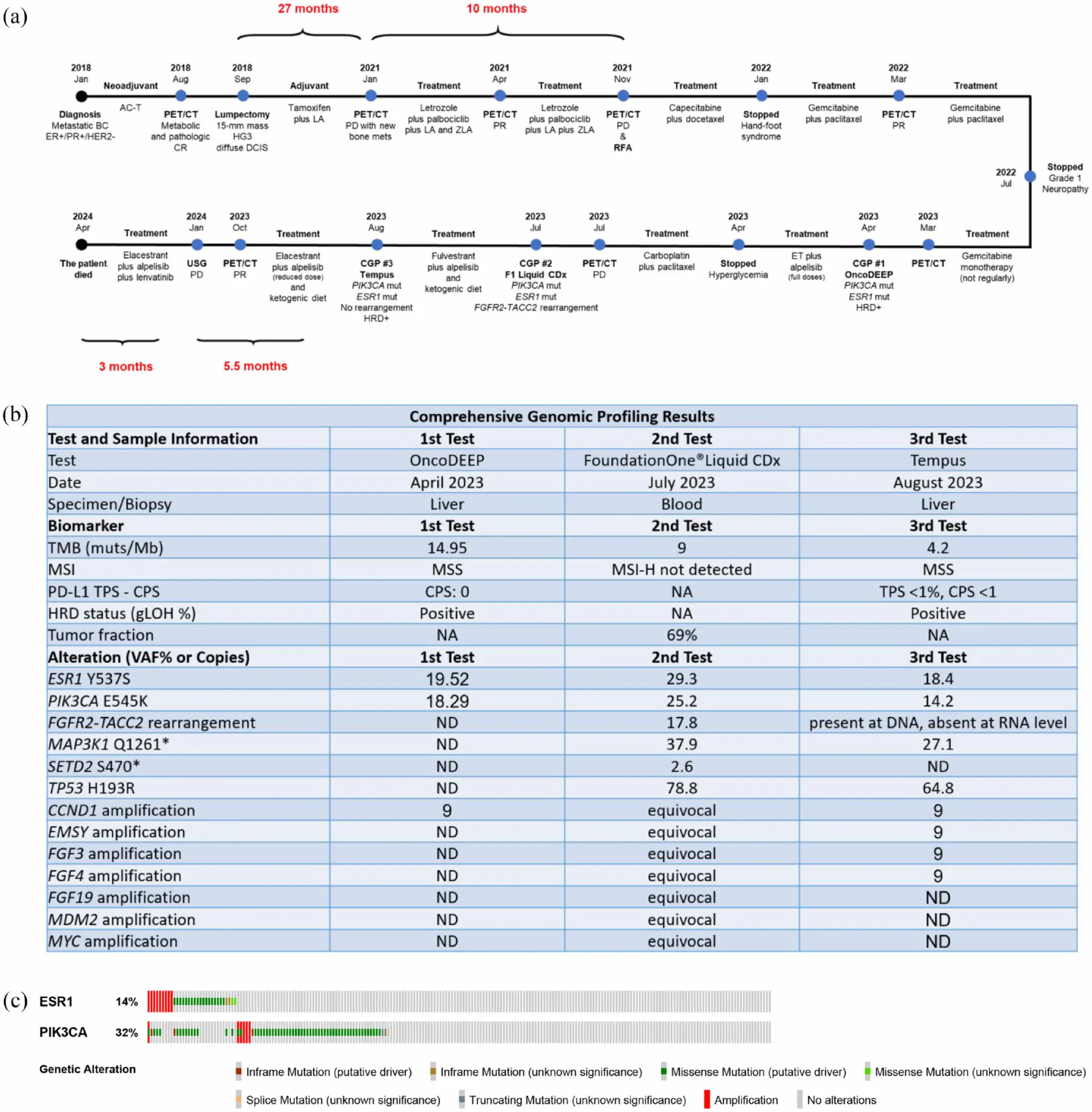
Our 43-year-old female patient was diagnosed with metastatic breast cancer in 2018. As her disease progressed, many different treatments were tried in turn, including chemotherapy, hormone therapy and targeted therapies, but either the disease progressed or the treatments could not be continued because of side effects.
Comprehensive genomic profiling performed on the patient's tumor tissue showed mutations in the ESR1 and PIK3CA genes. These mutations can render standard hormone therapies ineffective.
Based on these genetic findings, our team combined two drugs: elacestrant, a next-generation oral hormone therapy, to target the ESR1 mutation, and alpelisib, a PI3K pathway inhibitor, to suppress the PIK3CA mutation. The drug doses were adjusted because the patient had previously experienced alpelisib-related elevation of blood sugar, and a ketogenic diet was applied to reduce side effects.
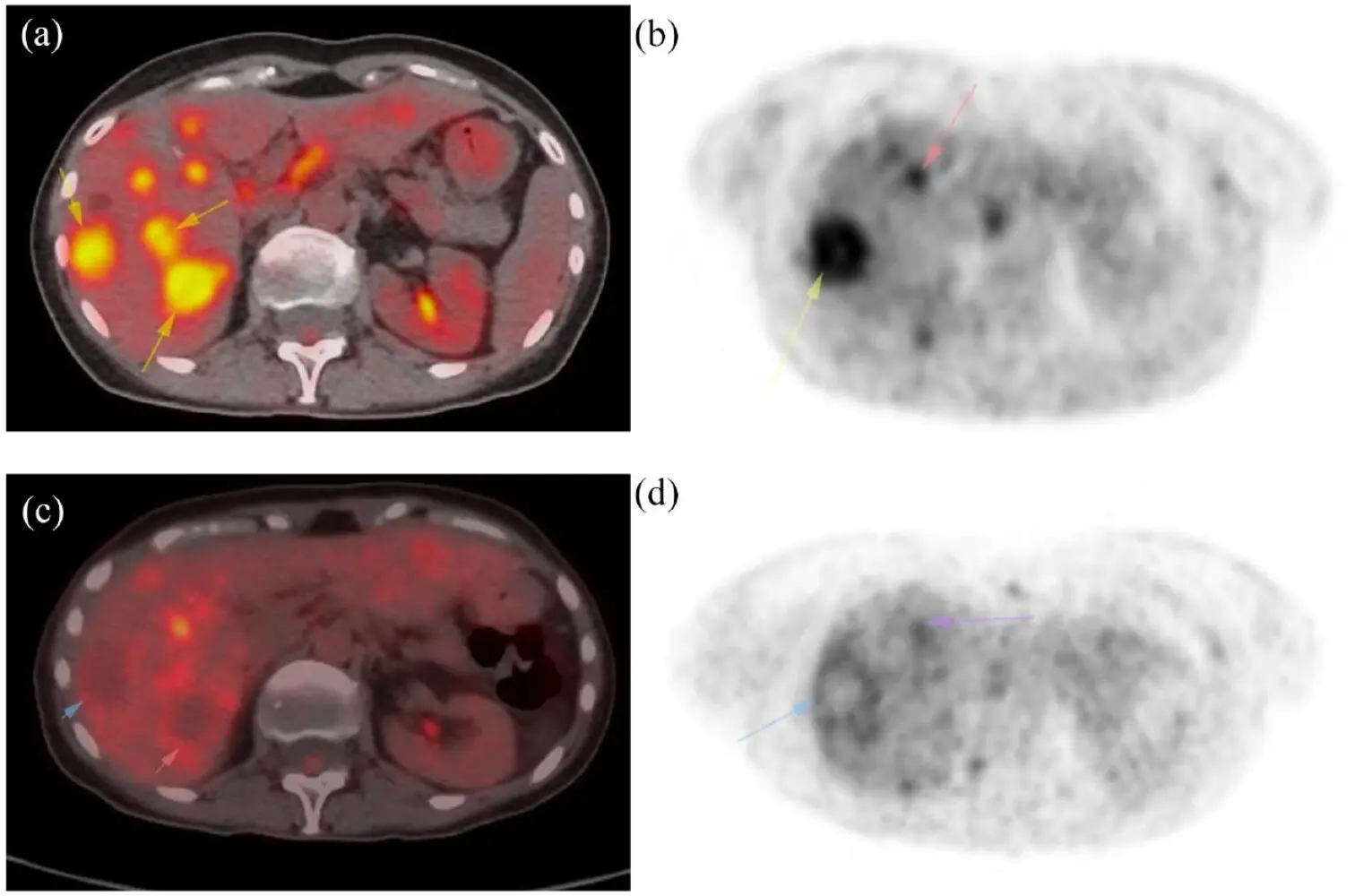
PET/CT imaging performed after treatment showed marked regression (partial response) in the liver and bone metastases.
Key Takeaways
- Genomic profiling should guide treatment: Comprehensive genomic profiling (CGP) testing can play a decisive role in treatment selection for patients whose standard options are exhausted.
- Dose adjustment and supportive approaches matter: Tailoring drug doses to the patient and supportive approaches such as a ketogenic diet can improve both the sustainability and the success of treatment.
- The combination is promising: For patients carrying both ESR1 and PIK3CA mutations this combination is promising, and a clinical trial is also ongoing.
- Translation into practice should accelerate: It is important that clinicians and health authorities move personalized treatment approaches into routine clinical practice more quickly.
Publication Link: https://journals.sagepub.com/doi/full/10.1177/17588359241297101
Images from the Publication